

Paper tube packaging has become a preferred solution for brands seeking durability, sustainability, and premium shelf appeal. Unlike standard folding cartons, paper tubes offer a cylindrical structure that provides both visual distinction and structural strength. However, what truly defines their market impact is the printing technique applied to the surface. Printing technology determines not only how packaging looks, but also how it feels, performs, and communicates brand value. From high-definition graphics to tactile finishes, selecting the right printing method is essential for achieving both aesthetic excellence and production efficiency.
Offset printing remains one of the most widely used methods for paper tube packaging because of its ability to reproduce sharp details and accurate colors. This technique transfers ink from a plate to a rubber blanket and then onto paper, resulting in clean gradients, consistent tones, and professional image clarity. For brands that rely on intricate artwork, photographic imagery, or color-critical branding, offset printing provides superior precision. It is particularly effective for large production runs because once plates are created, printing becomes highly cost-efficient. The smooth and uniform finish also serves as an ideal base layer for additional decorative processes such as lamination or varnishing.
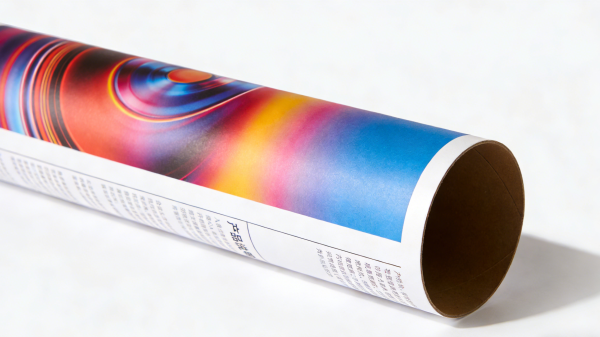
Flexographic printing is another common technique, especially suitable for simpler designs or high-volume manufacturing. Using flexible relief plates and fast-drying inks, flexo printing allows rapid production speeds and excellent adhesion on different paper materials. Although it may not match offset printing in ultra-fine detail reproduction, it excels in efficiency and durability. Many brands choose this method for shipping tubes, industrial packaging, or minimalist branding styles where bold colors and clean typography are more important than complex imagery.
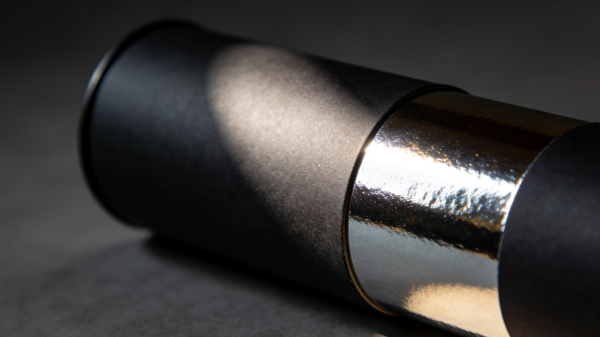
Foil stamping is widely regarded as one of the most luxurious finishing techniques available for paper tube packaging. This process does not use ink, but uses heat and pressure to apply a metallic or pigmented foil to a surface. The result is a reflective, tactile design that immediately draws attention. Gold, silver, holographic, and matte foils are frequently used to highlight logos, brand names, or decorative patterns. Because foil stamping interacts with light, it adds a dynamic visual dimension that cannot be achieved with standard printing alone. This technique is especially popular for cosmetics, candles, gourmet foods, and premium gift packaging, where first impressions influence purchasing decisions.
Embossing and debossing introduce texture into packaging design, transforming flat surfaces into dimensional branding elements. Embossing raises selected areas above the surface, while debossing presses them inward. Both techniques create tactile contrast that enhances perceived quality and reinforces brand identity through touch. When combined with foil stamping, these processes produce a layered effect that looks sophisticated and feels luxurious. Such tactile finishes are particularly effective in retail environments where customers interact directly with packaging before purchase.

Spot UV coating is another technique frequently used to enhance paper tube packaging. This process applies a glossy varnish to specific areas while leaving the rest of the surface matte. The contrast between shiny and non-shiny sections creates visual depth and highlights key design elements such as logos or illustrations. Spot UV is often paired with soft-touch lamination, which adds a velvety texture to the base surface. The combination of matte softness and glossy highlights creates a multisensory experience that communicates premium quality.
Digital printing has also gained popularity for short runs and customized packaging. Unlike traditional methods, digital printing does not require plates, allowing rapid setup and variable data printing. This makes it ideal for limited editions, seasonal packaging, or personalized branding campaigns. Although unit cost may be higher for large quantities, digital printing offers unmatched flexibility and quick turnaround times, making it a valuable option for modern marketing strategies.
Choosing the right printing technique depends on several factors, including production volume, design complexity, budget, and brand positioning. Luxury brands often combine multiple processes such as offset printing, foil stamping, and embossing to create layered visual effects, while minimalist brands may rely on a single clean printing method to achieve a modern aesthetic. The most effective paper tube packaging designs are those where printing technology aligns with brand identity and product positioning.
As competition in retail and e-commerce continues to intensify, packaging must do more than contain a product—it must communicate value instantly. Printing techniques play a decisive role in this process by shaping how packaging is perceived visually and physically. Whether it’s metallic sheen, textured surfaces, or high-resolution graphics, advanced printing technology can transform paper tube packaging into a powerful brand promotion tool, attracting attention, increasing brand awareness, and enhancing the customer experience.