

Custom paper tube packaging has gained widespread popularity across industries such as cosmetics, food, candles, and retail due to its durability, sustainability, and premium appearance. However, the cost of producing custom paper tubes can vary significantly depending on multiple factors. Understanding these cost drivers is essential for businesses looking to optimize their packaging investment while maintaining quality and brand consistency.
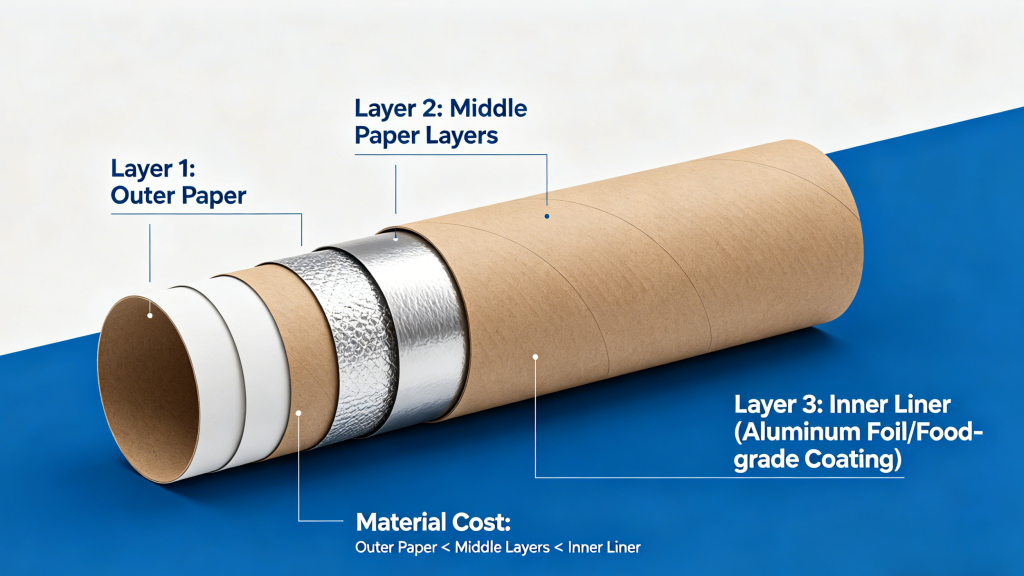
One of the most influential cost factors is material selection. Paper tubes are typically made from kraft paper, white paper, or specialty paper, combined with inner linings such as aluminum foil, greaseproof paper, or food-grade barriers. The thickness and quality of the paperboard directly impact both durability and price. High-density paperboard provides better structural strength but increases material costs. Additionally, choosing eco-friendly or FSC-certified materials may slightly raise the price but can enhance brand value and appeal to environmentally conscious consumers.
Tube dimensions and structural complexity also play a significant role in determining production costs. Larger tubes require more raw materials, while smaller tubes may involve more precise manufacturing processes. Custom features such as telescoping designs, rolled edges, crimped ends, or special closures add to production complexity and labor requirements. Tight tolerances and unique structural designs often require specialized machinery or additional manual work, which further increases costs.
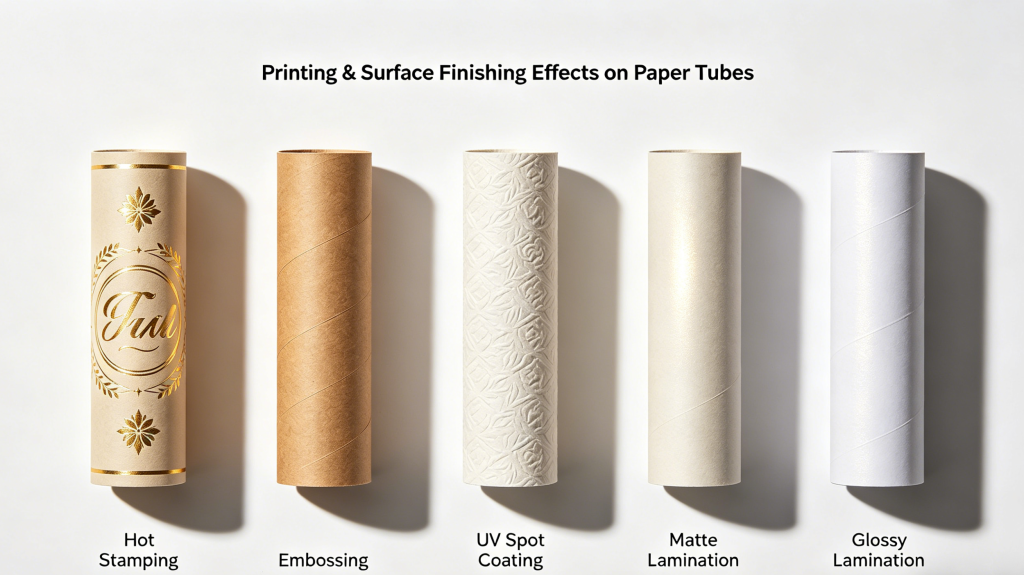
Printing and finishing processes are another major cost component. Basic paper tubes with simple one-color printing are relatively cost-effective, while high-end designs with multi-color offset printing, UV coating, embossing, debossing, or foil stamping significantly increase production expenses. Surface finishes such as matte lamination, glossy lamination, or soft-touch coatings not only enhance visual appeal but also add to the overall cost. The level of customization in branding directly correlates with the final price of the packaging.
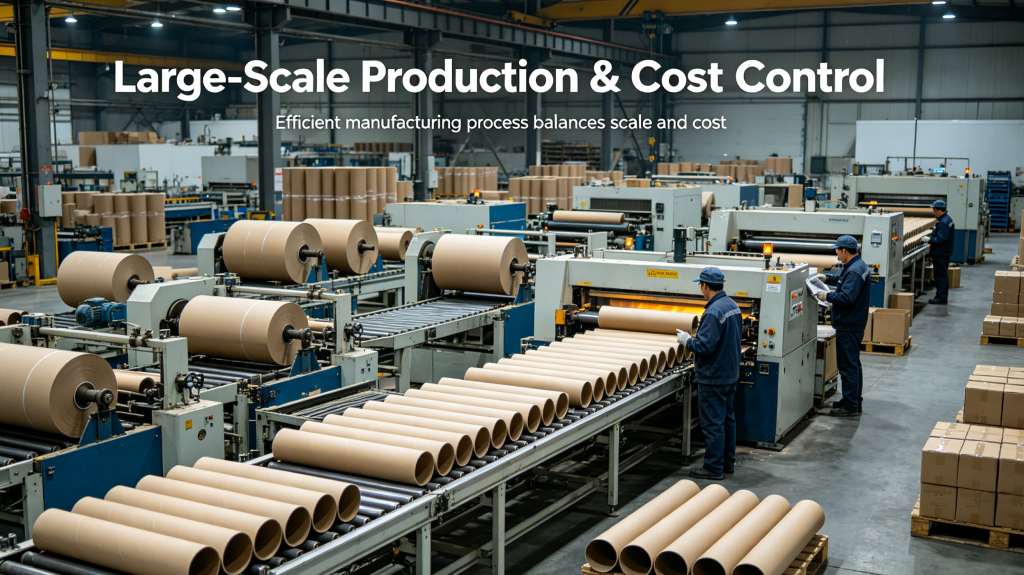
Order quantity has a direct impact on unit cost due to economies of scale. Larger production runs allow manufacturers to spread setup costs, such as printing plates and machine calibration, across more units, resulting in a lower cost per piece. Conversely, small batch orders tend to have higher unit prices because fixed costs are distributed over fewer units. For businesses testing new products or launching limited editions, balancing order quantity with budget constraints is a critical consideration.
Labor and manufacturing processes also contribute to overall costs. Automated production lines can reduce labor expenses and improve efficiency, but certain custom designs still require manual assembly or quality inspection. Complex structures, intricate finishes, and high-quality standards increase labor input and production time. Choosing an experienced manufacturer with optimized processes can help control these costs while ensuring consistent quality.
Packaging inserts and additional components further influence the total cost. Paper tubes can include inner trays, foam inserts, paper dividers, or sealing lids to enhance product protection and presentation. Each additional component requires extra materials and assembly steps, which increases the overall production cost. However, these elements can also add value by improving functionality and customer experience.
Logistics and shipping considerations are often overlooked but can significantly affect total expenses. The size, weight, and packaging method of paper tubes impact shipping costs, especially for international orders. Efficient packing designs, such as nesting or compact arrangements, can help reduce transportation costs. Additionally, flat-packed or semi-assembled designs may offer savings in storage and shipping.
Quality control and certification requirements can also add to production costs. Industries such as food and cosmetics often require strict compliance with safety and hygiene standards. Certifications, testing, and inspection processes ensure product safety but may increase production time and cost. Investing in quality assurance, however, helps prevent product damage and potential losses in the long run.
In conclusion, the cost of custom paper tube packaging production is influenced by a combination of material choices, design complexity, printing techniques, order volume, labor, and logistics. By carefully evaluating these factors, businesses can make informed decisions that balance cost efficiency with packaging performance and brand impact. Strategic planning and collaboration with reliable manufacturers are key to achieving high-quality packaging solutions within budget.