

Custom paper tubes have become an increasingly popular packaging solution across industries ranging from cosmetics and candles to food, apparel, and promotional merchandise. Their structural strength, premium appearance, and eco-friendly material options make them an ideal alternative to traditional rigid boxes or plastic containers. Understanding how custom paper tubes are made—from initial concept to final production—helps brands appreciate the craftsmanship, engineering precision, and design planning involved in creating high-quality cylindrical packaging.
The process begins with concept development, where packaging requirements are defined according to product dimensions, weight, protection needs, and branding goals. Engineers and designers determine the tube diameter, height, wall thickness, and closure style. At this stage, structural planning is critical because paper tubes must balance durability with material efficiency. A tube that is too thin may deform during shipping, while one that is overly thick can increase costs and shipping weight. Precise structural design ensures optimal performance without unnecessary material use.
Material selection follows conceptual planning. Paper tubes are typically constructed from multiple layers of kraft paper, recycled paperboard, or specialty paper wrapped around a mandrel to form a rigid cylindrical wall. The choice of paper affects strength, texture, printability, and sustainability. Inner linings may be added for moisture resistance or food safety compliance, while outer wraps are selected based on visual appearance and finishing compatibility. Selecting the right combination of core board and outer paper ensures both mechanical performance and aesthetic appeal.
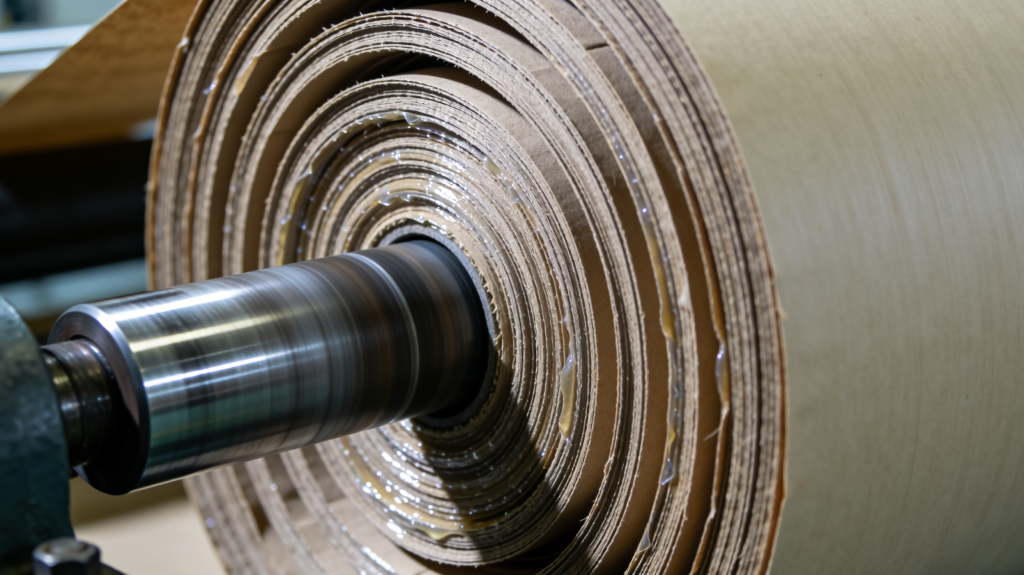
Once materials are finalized, manufacturing begins with spiral or convolute winding. In spiral winding, long strips of paper are wound around a steel mandrel at an angle, creating a continuous tube that is later cut to size. In convolute winding, sheets are wrapped straight around the mandrel, producing cleaner seams that are ideal for high-end packaging. Adhesives are applied between layers to bond them permanently, forming a rigid structure. The tubes are then cut with precision blades to exact lengths specified in the design files.
After structural formation, surface finishing and printing processes are prepared. Artwork is pre-checked for resolution, color mode, dieline alignment, and finishing layers. Printing methods such as offset printing, flexographic printing, or digital printing are selected based on design complexity and production volume. Offset printing provides superior color accuracy for premium branding, while digital printing suits short runs or variable designs. Accurate registration is essential to ensure graphics align perfectly around the cylindrical surface without distortion or visible seams.
Following printing, decorative finishes are applied to enhance visual impact and tactile quality. Techniques such as foil stamping, embossing, debossing, lamination, or spot UV coating can transform a simple paper tube into a luxury packaging presentation. These finishes must be carefully registered with printed graphics, as even minor misalignment can disrupt the visual balance. Surface coatings may also improve scratch resistance and durability during transportation and retail handling.

Assembly is the next phase, during which end caps, inner plugs, or rolled edges are added depending on the chosen closure design. Some tubes feature telescopic structures with separate lids and bases, while others use friction-fit plugs or metal caps. Each component must fit precisely to maintain structural integrity and ensure a satisfying opening experience. Quality control inspections verify dimensions, bonding strength, print accuracy, and finish consistency before packaging the tubes for shipment.
The final stage involves packaging and logistics preparation. Finished tubes are packed in protective cartons to prevent deformation during transit. Manufacturers often conduct drop tests, compression tests, and humidity tests to confirm durability under real-world shipping conditions. These evaluations ensure that the tubes not only look attractive but also protect the product effectively throughout distribution.
Custom paper tube production is a combination of engineering, printing technology, and craftsmanship. Every step—from structural design to finishing—contributes to the final packaging quality. When executed correctly, a custom paper tube does more than hold a product; it communicates brand identity, enhances perceived value, and creates a memorable unboxing experience. Understanding this complete production journey allows brands to collaborate more effectively with manufacturers and achieve packaging that is both visually striking and functionally reliable.